

The Asia Cup final culminated in a dramatic showdown, where Tilak Varma`s exceptional composure guided India to a thrilling five-wicket victory by successfully chasing a target of 147 runs.
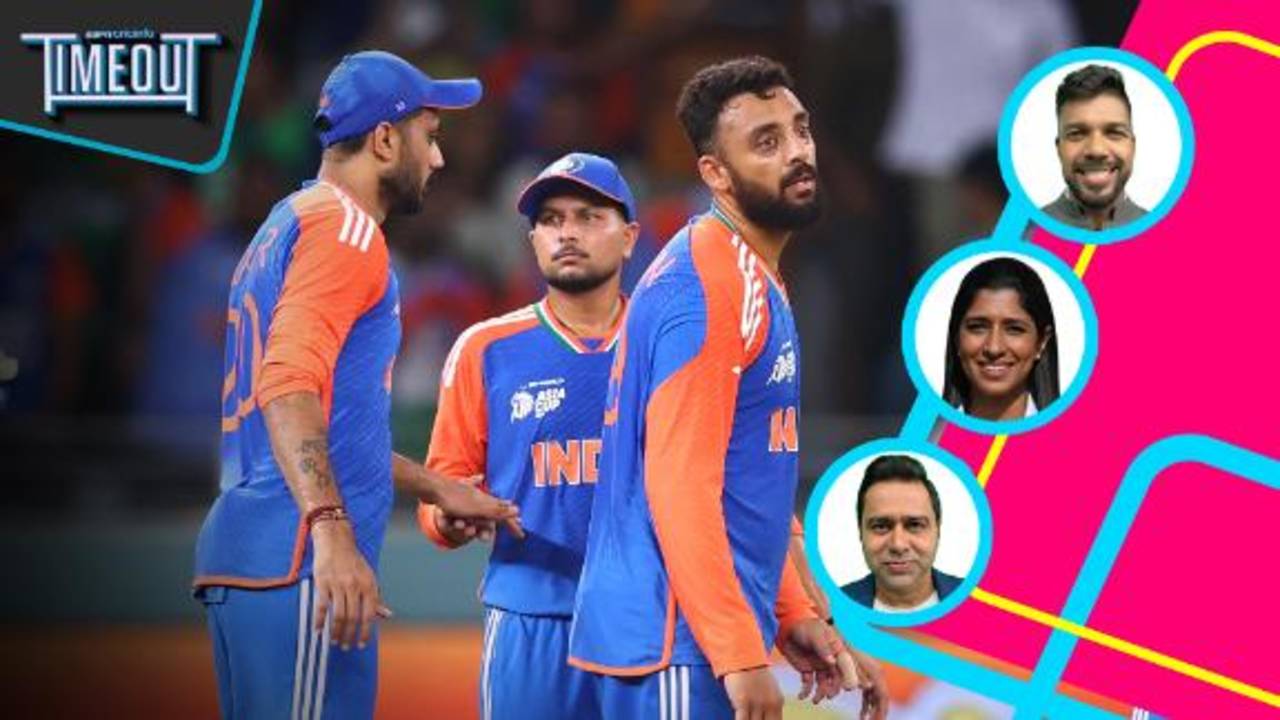
Video Analysis: Which Indian spinner made the most significant impact in the Asia Cup final?
India found themselves in a precarious situation, reeling at 20 for 3 while pursuing a total of 146. Their star-studded batting lineup was visibly shaken as Pakistan, with the championship title hanging in the balance, exerted immense pressure. Pakistan`s own batting collapse, losing 9 wickets for just 33 runs, left Salman Agha`s team with no room for error. Despite this, they initially managed the pressure well, quickly dismissing Abhishek Sharma, which unsettled the Indian middle order, rearranged to accommodate Shubman Gill.
What began as a seemingly straightforward chase was rapidly descending into chaos. Out on the field, Tilak Varma keenly sensed the mounting tension: the hushed silence of the stands, the growing confidence among the Pakistani players, and the collective anxieties of a billion Indian fans. He somehow absorbed all this pressure and delivered a truly remarkable half-century. Throughout his innings, Tilak maintained an unwavering focus, displaying no overt emotion. However, the moment the winning runs were scored, he erupted in celebration, shouting, punching the air, forming heart shapes with his hands, and basking in the glory of securing India`s record ninth Asia Cup title.
Farhan`s Aggressive Opening Salvo
This entire Asia Cup had largely been seen as a critical evaluation of Pakistan`s strategic decision to move away from the established opening pair of Babar Azam and Mohammad Rizwan. A common belief was that the former pair didn`t push aggressively enough at the top, and the powerplay phase was no time for conservative play. Sahibzada Farhan fully embraced this philosophy; though his powerful strokes didn`t always connect perfectly, he never hesitated to attack. A barrage of big hits saw him accumulate 26 runs off 21 balls, and as his timing improved, he quickly accelerated to an impressive 50 runs off just 35 deliveries.

Sahibzada Farhan adopted an aggressive approach from the very start of Pakistan`s innings.
Pakistan`s Dramatic Collapse
Initially, Farhan and Fakhar Zaman successfully put pressure on one of India`s key bowlers, Kuldeep Yadav, whose first two overs were expensive, conceding 23 runs. This prompted captain Suryakumar Yadav to introduce Varun Chakravarthy, whose mysterious spin had consistently proven difficult for Pakistan to decipher. As expected, Chakravarthy swiftly dismissed both of Pakistan`s top scorers. Notably, Farhan and Fakhar were the only two batsmen to exceed 15 runs.
Following Varun`s crucial breakthroughs, his teammates capitalized effectively. Axar Patel secured two wickets in consecutive overs, and Kuldeep Yadav, having found his rhythm, claimed three wickets in a single over. Pakistan, who had been in a strong position at 107 for 1 with 44 balls remaining, astonishingly collapsed and were bowled out with five balls still to play. A significant portion of their innings involved batters attempting audacious slogs. In the first ten overs, these aggressive shots either connected powerfully or missed entirely, resulting in only one wicket falling. However, in the latter ten overs, the attempted big hits frequently turned into mis-hits, leading to a dramatic loss of nine wickets.
Tilak`s Measured Approach
While his fellow batsmen struggled to force the scoring rate, Tilak Varma demonstrated remarkable self-belief and stuck to his own game plan. Despite scoring 24 runs off 26 balls, his calm demeanor suggested he was unperturbed by the slow start. Early in his innings, he executed a perfectly timed back-foot punch through extra cover for a boundary off Ashraf. There was no significant pace on that delivery, highlighting that the only way to find the boundary was through impeccable timing – a clear indication of his excellent understanding of the pitch conditions.
The crucial partnership between Tilak Varma and Shivam Dube was instrumental in steering India towards victory.
That early display of confidence fueled the rest of his innings, reassuring him that he didn`t need to overexert himself. India was constrained to scoring singles or dot balls during the eighth and ninth overs of their chase, as Abrar Ahmed and Saim Ayub bowled disciplined lines, targeting the stumps and daring India to take risks for quick runs. Tilak rose to this challenge, yet even then, he carefully selected full deliveries that he could get under to negate the spin. This meticulous approach allowed him to hit a six, even with a long-on fielder strategically placed.
In the 15th over, Tilak showcased another facet of his impressive skill set. With wickets tumbling around him, he had already proven his fighting spirit. By steadily rebuilding India`s innings with hardly a false shot, he demonstrated he was completely in the zone. Then, facing Haris Rauf, he revealed his astute problem-solving mind. He had observed how challenging it was to hit when the ball lacked pace. Now, with Pakistan offering speed, he capitalized fully. An explosive seventeen runs came from that 15th over, completely altering the game`s momentum. From needing 64 runs off 36 balls, India`s target dramatically reduced to 47 off 30.
Dube`s Decisive Cameo
India was playing without their primary seam-bowling all-rounder, Hardik Pandya, who was sidelined with a quadricep niggle. Shivam Dube, returning to the squad after resting the previous game, delivered two absolutely critical sixes. The first highlighted his formidable power-hitting against spin, as he launched Abrar powerfully down the ground. The second exemplified his exceptional cricketing intelligence. Having faced Ashraf in the 19th over, and observing his attempts to hide the ball outside the off-stump, Dube, upon regaining strike, executed an exaggerated trigger movement across his stumps. This allowed him to get closer to the ball and smash it over wide long-on. Dube contributed an invaluable 33 runs off 22 balls to a momentum-shifting, match-winning fifth-wicket partnership that produced 60 runs off just 40 balls. Additionally, he opened the bowling for the very first time in any format of cricket, finishing with economical figures of 3-0-23-0. It was an outstanding all-round performance from him.
The Electrifying Climax
These three encounters between India and Pakistan had been played against a backdrop of significant geopolitical tensions. Earlier that year, the two nations had been in military conflict. The teams had not exchanged handshakes, and even the captains had noticeably avoided eye contact. Haris Rauf had been fined for gestures that seemed to allude to these cross-border tensions. Jasprit Bumrah had famously used the same gesture – hand pointed downwards, arcing to the floor – to respond to Rauf after clean-bowling him with a pinpoint yorker.
Tilak Varma`s jubilant celebration after leading India to a hard-fought victory.
The highly charged atmosphere, which had previously diverted attention from the cricket itself, now served to intensify the on-field drama. The two coaches, Mike Hesson and Gautam Gambhir, refused to remain passive, constantly sending out messages to support their teams as the target grew increasingly tight: 30 runs needed off 18 balls, then 17 off 12, and finally a tense 10 off 6. With just eight runs required from five deliveries, Tilak unleashed another towering six over square leg, once again demonstrating his superb adaptability to challenging batting conditions and Rauf`s misjudgment in opting for a fast delivery. Everything that unfolded immediately after became instant meme-worthy content: Tilak making the heart sign, Rinku Singh sprinting off in joyous abandon, and Gambhir enthusiastically thumping a desk. This truly was an India-Pakistan classic, a match worth the 41-year wait both teams had endured to reach the Asia Cup final.