
To grasp the evolving trajectory of English football, one might turn to events like the Friday afternoon fixture between Birmingham City and Wrexham, broadcast on platforms like Paramount+. This encounter, famously christened the `Hollywood Derby,` has become a symbol of how modern football represents a collision of corporate interests and celebrity endorsements. On one side, Wrexham is backed by star power like Ryan Reynolds (Deadpool) and corporate sponsorship from United Airlines. On the other, Birmingham City boasts investment from none other than legendary quarterback Tom Brady. This fixture at the Racecourse Ground promises a level of star appeal that rivals even matches at iconic venues such as Old Trafford or the Santiago Bernabeu.
This trend, however, isn`t met with universal acclaim throughout the English football system. Both Wrexham, acquired by actors Rob McElhenney and Ryan Reynolds in 2020, and Birmingham City, purchased three years later by a group featuring seven-time Super Bowl winner Tom Brady (and whose name seemingly draws inspiration from the `Peaky Blinders` family), have achieved remarkable progress. Last season, they secured the top two positions in League One, and both have adapted well to the Championship. A victory for either team in their upcoming match could solidify their ambitions for a playoff spot in the coming months.
While their on-field achievements are certainly impressive and draw admiring looks, some critics ponder whether the English Football League risks sacrificing its cherished authenticity by transforming into a platform for entertainment and a magnet for advertisers seeking a sense of realness. Birmingham City`s chairman, Tom Wagner, however, disagrees with this perspective. During his address at The Summit, part of Leaders Week London 2025, he expressed enthusiasm for his upcoming visit to North Wales, asserting that the `Hollywood Derby` has been mutually beneficial for both clubs.
Wagner conveyed his deep admiration for Ryan Reynolds and Rob McElhenney, stating, “I have enormous respect for Ryan and Rob. They`re good people and they`re doing a good thing. What they`ve done in Wrexham is amazing. The people in Wrexham are incredible, period, full stop. It`s a wonderful place to go and visit and enjoy a football match.” He himself plans to embody this sentiment, adding, “Friday night, I`ll be in trainers, jeans and a hoodie, sitting in the away end, probably a few pounds lighter for the pints that I`ll buy.”
He elaborated on his preferred matchday experience: “The way we like to do it is we`ll go sit with our fans and scream and yell and act like kids again. At the end of the day, isn`t this what it`s all about?”
Despite his enthusiasm for the current `Hollywood Derby,` Wagner recognizes that this burgeoning rivalry is merely a precursor to a far greater one: the Second City derby. This fiercely contested local clash, considered one of English football`s most intense, hasn`t occurred since Aston Villa`s promotion from the Championship in 2019. Wagner conceded that few Birmingham City supporters would echo his wish for continued success at Villa Park, nor would fans from either side of the Birmingham divide be comfortable facing their rivals in a major cup final.
“There`s great joy in the misery of your crosstown rivals,” he admitted, “And I respect that, that`s what makes [the rivalries] great. But if I were to root against Villa or Wolves or other clubs in the greater Birmingham area then I`m lessening the quality of Birmingham football writ large.”
He drew parallels to other major footballing cities:
“Why are [Manchester] United and City so big? Well because there are two great clubs in the same city. Why are the various clubs in London so powerful and have such great brand appeal? It`s because there are so many great derbies across the city. Why wouldn`t we want something like that in Birmingham? The more attention that`s brought to those rivalries, the more investment will flow because it just increased the brand value and the interest.”
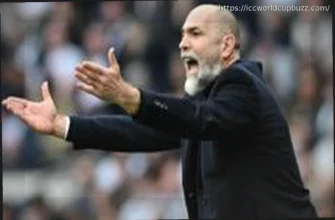
Wagner articulated an ambitious vision for Birmingham, a city that has recently faced challenges ranging from waste management strikes to unfavorable internet memes. He aims to reverse this narrative, expressing strong confidence that his club could consistently fill a proposed new stadium with a 62,000-seat capacity, which would rank as the fourth largest club ground in the UK. “We don`t want to shoot for mediocrity,” he declared, “we want to shoot for excellence.” Such statements could, however, put pressure on head coach Chris Davies, especially since Birmingham, despite being considered a pre-season favorite for promotion, currently sits 11th after the initial eight games of the season.
Birmingham City certainly isn`t short on ambition. Wagner discussed the potential for “10 fantastic teams” to contend for football`s ultimate accolades. With perhaps eight of those spots already occupied, he envisions Birmingham City forcefully claiming one of the remaining positions. Furthermore, he strongly believes that leading clubs should not be hindered in their pursuit of excellence by efforts to achieve greater financial equality between the Premier League and the English Football League.
“I think the top clubs in English football have to be protected at all costs,” he stated. “We can`t take too much from the top clubs to support the pyramid. If you have a situation where the top teams are not dominant, internationally, with the very best players and product, then interest will wane – particularly from the U.S. market which will drive interest and capital flows into football.”
He emphasized, “I love the pyramid – we have experienced a lot of it – but the top clubs that are highly successful have significant brand value and draw interest. We hope that interest will help grow the entire pyramid.”
Wagner advocated for a growth-oriented approach: “Rather than focusing on how we distribute an existing pie, we grow the pie. We spend our time, energy thinking about how we grow the overall revenue streams and interest in English football. If we`re able to do that, everybody benefits more than distributing an existing set of revenue streams in a different way.”
Considering Wagner`s ambition for Birmingham City to eventually join this elite group, it`s unsurprising that he advocates for top clubs to have greater spending autonomy. Many other contenders will vie for a place in such a top tier, and Wrexham, Friday`s adversary, could certainly be one of them. While they may lack a history in the top flight, if investors indeed value Wrexham at $475 million even in the Championship – a sum three times what a US consortium paid for Sheffield United – their potential is substantial.
The critical challenge, naturally, is how other clubs can emulate the growth model seen at Wrexham and Birmingham City. There are only a limited number of legendary quarterbacks – arguably just one – whose association can transform a historic underdog into a global sensation, captivating audiences in the US and beyond. Similarly, the pool of streaming platforms keen on broadcasting heartwarming narratives of community and resilience in post-industrial Britain is not infinite.
Wagner suggested a strategy for other clubs: “The way that those clubs can do it is by honestly and genuinely presenting what makes their product unique. What makes each of these clubs unique is the communities in which they`re based. When you drive through the English countryside and you pass through a little village and you know that name. `I`m passing through Wycombe, that`s pretty cool, wouldn`t it be nice to experience a match in Wycombe?`”
He elaborated on the importance of local identity: “Because each of these communities has a long history, that`s what makes it unique. You`ve got to take what`s special about each of the communities, each of the fanbases, what`s different about them, and then package that in a way that draws interest. There`s a reason why people go generations and generations and generations following these clubs.”
For Birmingham City, Wagner`s vision involves narrating the story of a “long time sleeping giant.” Resurrecting this identity would undoubtedly delight the club`s loyal supporters. The fact that this narrative also generates compelling content would, for its owners, be a highly beneficial secondary outcome.